NeLeSo OCPP Gateway
Technical standalone package comprising the Broker, integrated OCPP Server/CoreCPMS, Admin UI and PostgreSQL for customer-managed Linux.

NeLeSo OCPP Gateway · technical standalone package
Connect your existing charging stations to the right CPMS and use operational data in additional systems. NeLeSo OCPP Gateway connects your primary backend, additional OCPP targets and MQTT/REST outputs on your infrastructure. Data access and control permissions are granted separately.
A standalone package from our software building blocks . Technical documentation · Downloads & installation
In operation · anonymous project reference
A customer project connects 9,000 chargers. Three brokers operating in parallel with a Redis cache are working well in production there. This reference describes that specific deployment; we tailor the architecture and capacity of your installation to your needs.
Portfolio position
NeLeSo OCPP Gateway is the commercial product for external OCPP targets, observation and migration. Its technical standalone package includes the Broker, integrated OCPP Server, Admin UI and PostgreSQL. Your IT controls the server, network, TLS and backups.
Technical standalone package comprising the Broker, integrated OCPP Server/CoreCPMS, Admin UI and PostgreSQL for customer-managed Linux.
Commercial production product for operating, integrating and accounting for charging infrastructure, with Starter, Professional and Enterprise plans.
Separate non-production paths: Developer Kit publication follows rights and security reviews; the public Sandbox uses synthetic data only and is reset regularly.
Routing isolation
Additional backends receive permitted data over separate connections. Live observers remain read-only; virtual backends can request individually permitted OCPP actions. The Broker checks access and priorities before dispatch. A slow additional target does not block the primary communication path.
Protocol contract
The Broker supports both protocols natively over WS/WSS. Station and target negotiate the same OCPP version. OCPP 1.6 transaction IDs are correlated separately between primary and observer paths; OCPP 2.0.1 TransactionEvents remain in their native model.
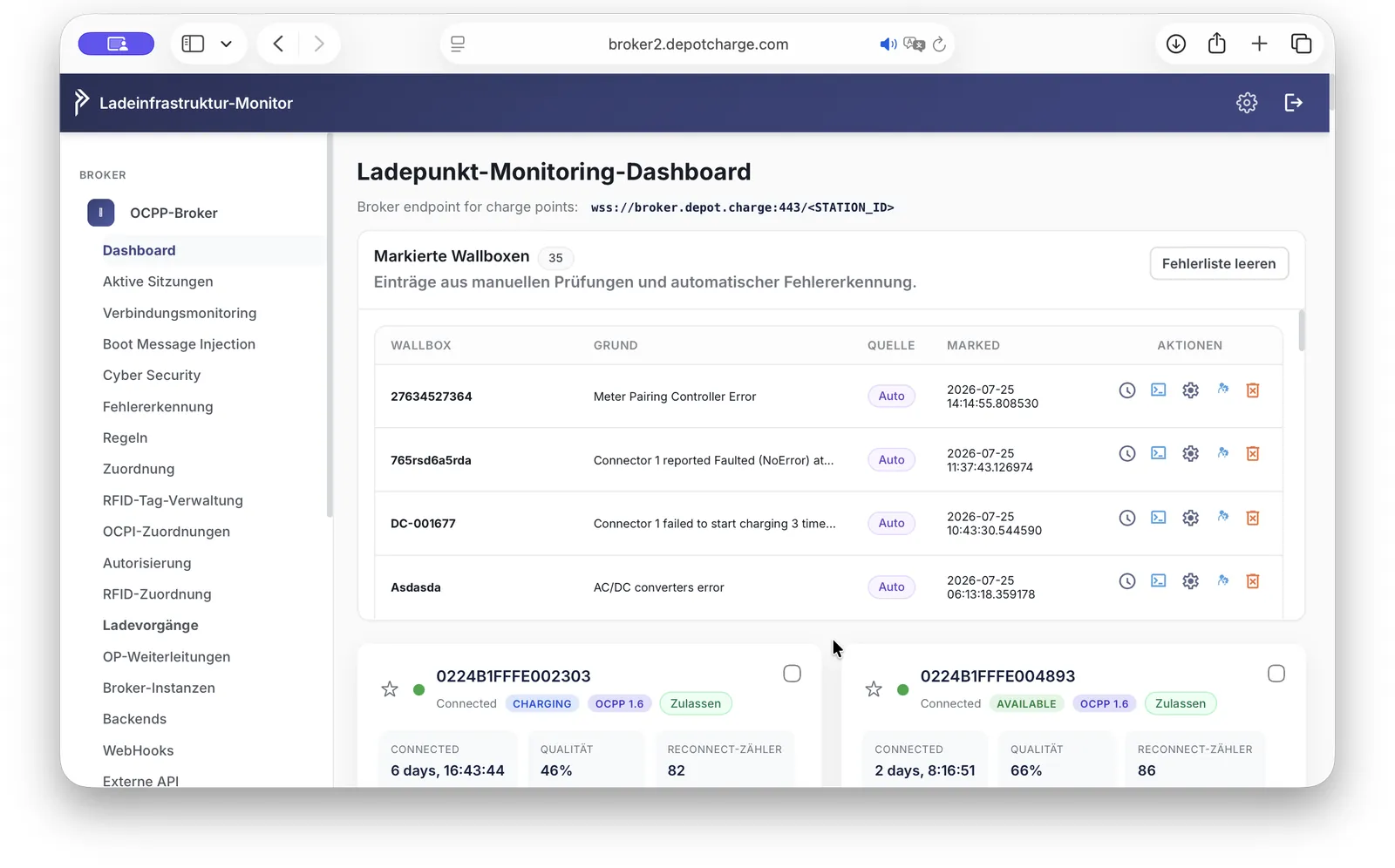
OCPP 1.6J · OCPP 2.0.1 · WS/WSS
Operating model
Docker Compose isolates Broker, CoreCPMS, Admin, the separate workflow/export worker and PostgreSQL. Local core operations require no NeLeSo cloud or telemetry link. Linux hardening, firewall, DNS, certificates, monitoring and restore testing stay under your infrastructure control; remote target backends and online services naturally need to remain reachable.
Install in your data centre, cloud tenant or on a suitable Linux edge system at the site.
Observer failures and backpressure do not affect the primary path.
File-based secrets, encrypted backend credentials and no OCPP payloads in standard logs.
We agree backend destinations, data integrations and operating responsibilities with your team, then validate how they work together in a pilot. Explore implementation →
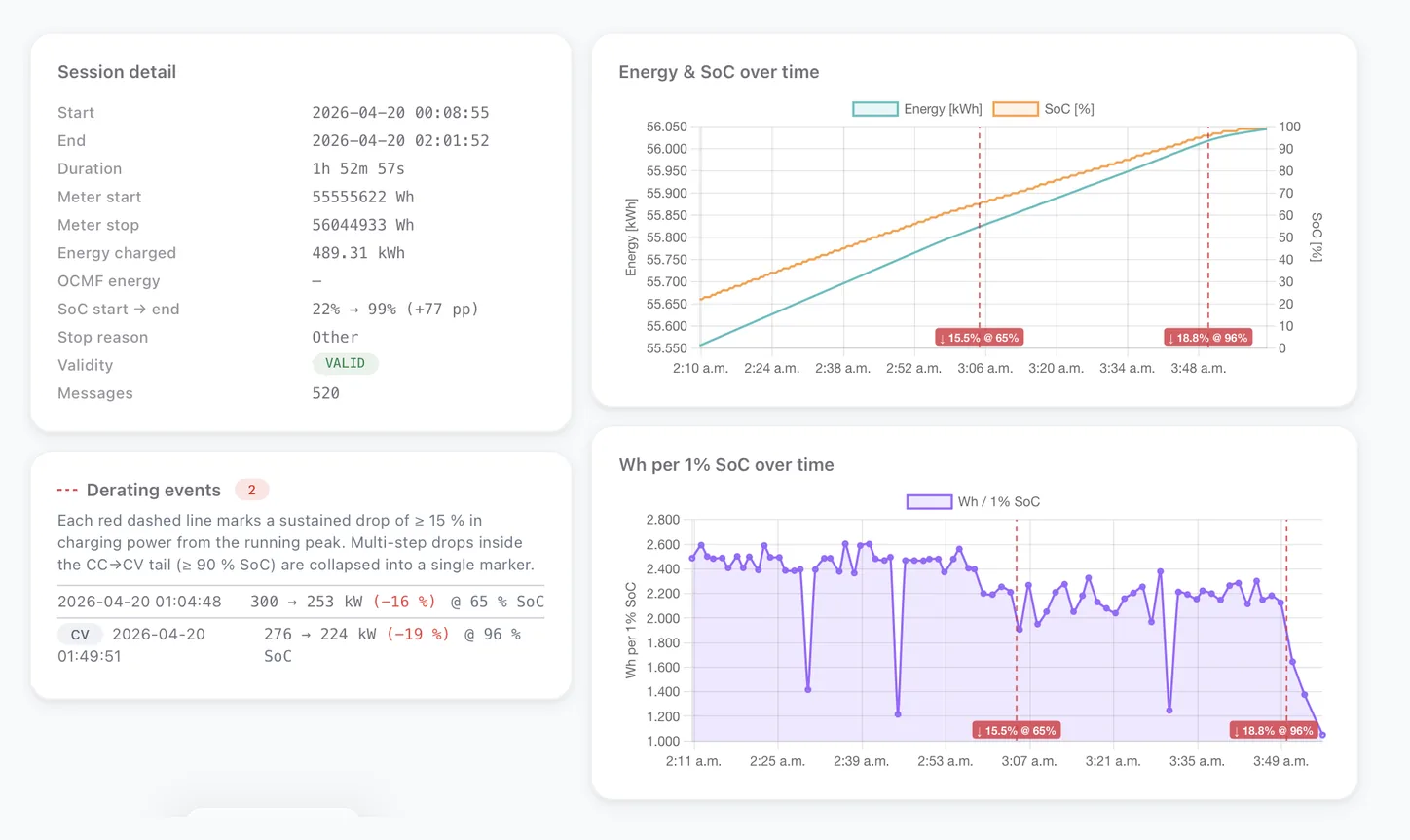
DEPOTCHARGE.COM · NeLeSo OCPP Gateway · CORECPMS
Reference customer
DepotCharge uses the Broker as its integration layer: some depot hyperchargers terminate at the integrated CoreCPMS, while others remain connected to incumbent operator backends. Charging sessions are exported and analysed for DepotCharge billing without replacing the existing backend landscape first.
Case study: DepotChargeIndicative pricing
The current pricing hypothesis is a €250 monthly base per installation including base support plus €1 per active OCPP Charge Point ID and month. Optional standard onboarding is estimated at €1,900. Only the individual quotation is binding.
Base
€250
per installation / month, including base support
Usage
€1
per active Charge Point ID / month
Optional standard onboarding
€1,900
one-time, up to two remote person-days
Example for 600 active Charge Point IDs: €250 base + €600 usage = €850 per month; indicative first year with optional standard onboarding €12,100 net.
GitHub
Source code, Docker setup, migrations and security tests live in a separate private repository. Customer and evaluation access is granted by agreement.
FAQ
No. The primary backend and additional targets use separate connections. OCPP acknowledgements and charging authorization remain with the primary backend. Virtual backends can only request separately permitted actions through the command arbiter.
Yes. The software is designed for customer-managed Linux with Docker Compose and PostgreSQL – in the data centre, cloud tenant or on edge hardware at the site. Your IT retains infrastructure access; NeLeSo only needs time-limited application-level access for support.
OCPP 1.6J and OCPP 2.0.1 over WebSocket or WSS. The Broker in NeLeSo OCPP Gateway does not automatically translate protocol versions; station and target must speak the same version.
A unique OCPP Charge Point ID that establishes at least one authenticated connection during the billing month. Multiple connectors or EVSEs under one identity are not counted separately.
Your pilot project
Up to ten stations, one CPMS and one data destination. A four-week planning outline, documented acceptance and an agreed rollback procedure. Binding scope and pricing are set in the pilot proposal.